

Table of Contents
ToggleThe Impossible Benchmark: How Did They Top Water?
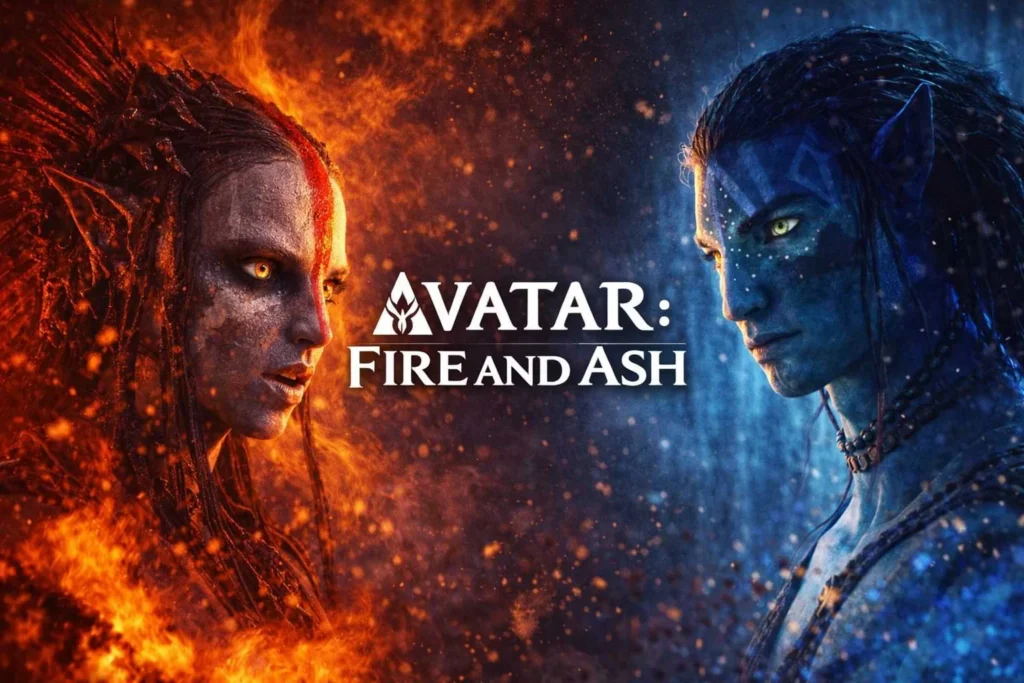
If you have been anywhere near a theater this week, you know that Avatar: Fire and Ash has finally landed. The popcorn is flowing, the box office is exploding, and the debates have already started. But for those of us obsessed with computer graphics and visual effects, there is only one burning question:
How did they possibly top The Way of Water?
When the second movie dropped, it fundamentally rewrote the book on CGI hydrodynamics. We thought water was the ultimate challenge. We were wrong.
In this Avatar 3 CGI breakdown, we are diving deep into how James Cameron took us away from the cool coasts and into the suffocating heat of the volcanic regions. We traded pristine water for complex thermodynamics, aggressive particle effects, and a grittier, harsher reality.
How much of Avatar 3 is CGI
When watching the breathtaking vistas of Pandora, the most common question viewers ask is simply: ” How much of this is real?”
For Avatar 3, expected to be titled Fire and Ash, the short answer is: Almost none of it is “real” in the traditional filmmaking sense, yet all of it is rooted in reality.
James Cameron has famously blurred the lines between live-action and animation to the point where the distinction is almost meaningless. However, if we are breaking down the final frames you see on screen, here is the reality of the CGI ratio expected for the third installment.
The 90%+ Benchmark
Based on The Way of Water, it is safe to estimate that upwards of 90% to 95% of the final shots in Avatar 3 will be fully or significantly computer-generated.
Why so high? Because if a Na’vi is on screen, that is CGI. If the environment is Pandoran flora and fauna, that is CGI. If the lighting is bioluminescent, that is CGI.
The only “true” live-action elements in these films are human characters (like Spider or the RDA scientists) filmed on physical sets. Even then, those physical sets are usually just small pieces of foreground scenery surrounded by massive green screens, which Wētā FX later replaces with digital jungles or volcanic landscapes.
Let’s look at the innovations currently melting eyeballs in cinemas worldwide.
1. The Thermodynamics of Pandora: Mastering Fire and Smoke
Water is heavy and reflective. Fire, however, is chaotic, emissive, and destructive.
The defining visual characteristic of Avatar 3 is heat. The challenge for Weta FX wasn’t just creating fire that looks real; it was creating Pandoran fire at an IMAX scale.
The Particle Simulation Challenge: The new volcanic biomes required massive leaps in volumetric rendering. We aren’t just talking about a few campfire assets. We are seeing:
Pyroclastic Flows: Massive clouds of superheated gas that move like a fluid but hit like a solid wall.
Ambient Ash: The air in the new biome feels “choked.” Every frame features millions of drifting ash particles that react to character movement.
Viscous Lava: Unlike water, the lava in the film forms crusts as it cools, requiring a simulation that handles changing states of matter in real-time.
Read More Articles on : Global Tech Leaders Betting Big on India’s AI Future
2. The Ash People: A Grittier Performance Capture
We need to talk about the new tribe. The Ash People (led by the terrifying Varang) are noticeably different from the forest or reef Na’vi, and the CGI reflects this perfectly.
The Texture of Survival: While the reef Na’vi had smooth, aquodynamic skin, the Ash People are covered in a fine layer of soot and dust. Their skin texture is rougher, drier, and cracked.
The real triumph here is the “interaction” between the characters and their environment. When they move, ash falls off their shoulders. When they sweat near heat sources, the dust streaks on their skin. These aren’t just character rigs placed in a background; they are physically integrated into the simulation.
3. Lighting from Within: The Volcanic Palette
In previous films, the primary light source was usually the sun or bioluminescence. In Avatar 3, the environment is the light source.
Subsurface Scattering on Overdrive: Lava and glowing fissures cast harsh, warm, dynamic light onto the characters. This put immense pressure on the SSS (Subsurface Scattering) models used for the Na’vi skin.
When a character stands next to a lava flow, you can see the light penetrating their translucent ears and fingertips, glowing blood-red from within. The interplay between the cool blue of the Na’vi and the aggressive orange glow of the lava is a masterclass in lighting.
Comparison: Water vs. Fire Tech
| Feature | Avatar: The Way of Water (2022) | Avatar: Fire and Ash (2025) |
| Primary Element | Water (Fluid Dynamics) | Fire & Magma (Thermodynamics) |
| Key Challenge | Refraction & Wet Skin | Volumetric Smoke & Ash Density |
| Lighting | Caustics (Sunlight through water) | Emissive (Light from ground/lava) |
| Skin Texture | Slick, wet, reflective | Matte, dusty, dry |
4. The "No AI" Stance
Perhaps the most interesting detail isn’t about what tech was used, but what wasn’t. James Cameron famously stated that no generative AI was used to create the art in this film.
In an era where every other blockbuster is leaning on AI upscaling, Avatar 3 remains a testament to brute-force physics simulation and human artistry. Every frame of ash and ember was simulated by Weta’s proprietary tools (likely an evolution of their ‘Loki’ system), ensuring that the physics remain grounded in reality, not hallucinated by an algorithm.
Conclusion: The New Gold Standard
Avatar 3 proves that the ceiling for visual effects is nowhere in sight. Just when we thought we had seen peak photorealism, Cameron found a new corner of Pandora to force innovation.
They mastered the jungle. They conquered the ocean. And now, they have tamed fire. It leaves a thrilling question for the VFX industry: What on earth are they going to have to invent for Avatar 4?
Read More Articles on: Technology and AI




Pingback: Avatar CGI Skin Texture Comparison – findthismovie.com
Pingback: Avatar CGI Scale Comparison – findthismovie.com
Pingback: Avatar CGI Texture Upgrade Comparison – findthismovie.com
Pingback: Avatar CGI Ash and Dust Simulation – findthismovie.com
Pingback: Avatar 1 vs Avatar 2 vs Avatar 3 CGI Comparison – findthismovie.com
What’s up, everyone? I downloaded 51gameapp. It’s got a pretty gameplay. Check it out: 51gameapp
Yo, just checked out gamesx66! Site’s pretty slick, easy to navigate. Good vibes all around! Check it out gamesx66
Bbetwin, eh? Gave it a whirl. Seems solid, plenty to do. Could be a decent shout. Check it: bbetwin
Had a go on v88club. Feels a bit more exclusive than some others, if you catch my drift. Game selection is decent, and I had a smooth experience loading everything up. Check it out!
66ffbet…hmm, let me tell ya, sometimes you gotta try stuff to see if it’s any good, right? Well, I did and 66ffbet is legit. Check out what they offer! 66ffbet
Gotta say, 123dbet caught my eye. Gave it a whirl, and I’m impressed! Cool interface. Defo worth a look-see! 123dbet
Pingback: Avatar CGI Fire and Smoke Physics – findthismovie.com
Pingback: Avatar CGI Lighting Upgrade Comparison – findthismovie.com