

Table of Contents
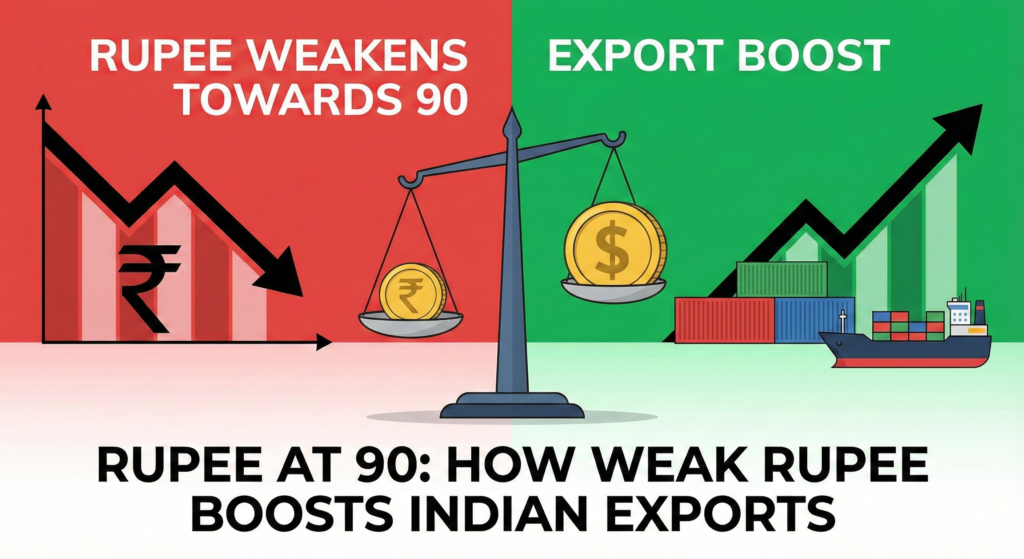
ToggleRupee at 90: How Weak Rupee Boosts Indian Exports
Open any news app today, and you will likely see a scary headline: “Rupee hits all-time low.“ With the currency hovering near the Rupee at 90 against Dollar mark, the average Indian reaction is worry. We instantly think about expensive petrol, costly iPhones, and that foreign vacation becoming a distant dream.
But if you walked into the office of a textile exporter in Tirupur or a software CEO in Bengaluru right now, you might see them smiling.
Why? Because in the world of global trade, a cheaper currency is like a “Discount Sale” sign for the rest of the world. Let’s break down the economics without the jargon and understand how weak rupee boosts Indian exports.
Read Our Article on: How Venture Capital Helps Startups
The "Discount Sale" Effect: How It Works
Think of the global market as a giant supermarket. The US Dollar is the customer, and countries like India, China, and Vietnam are the brands on the shelf.
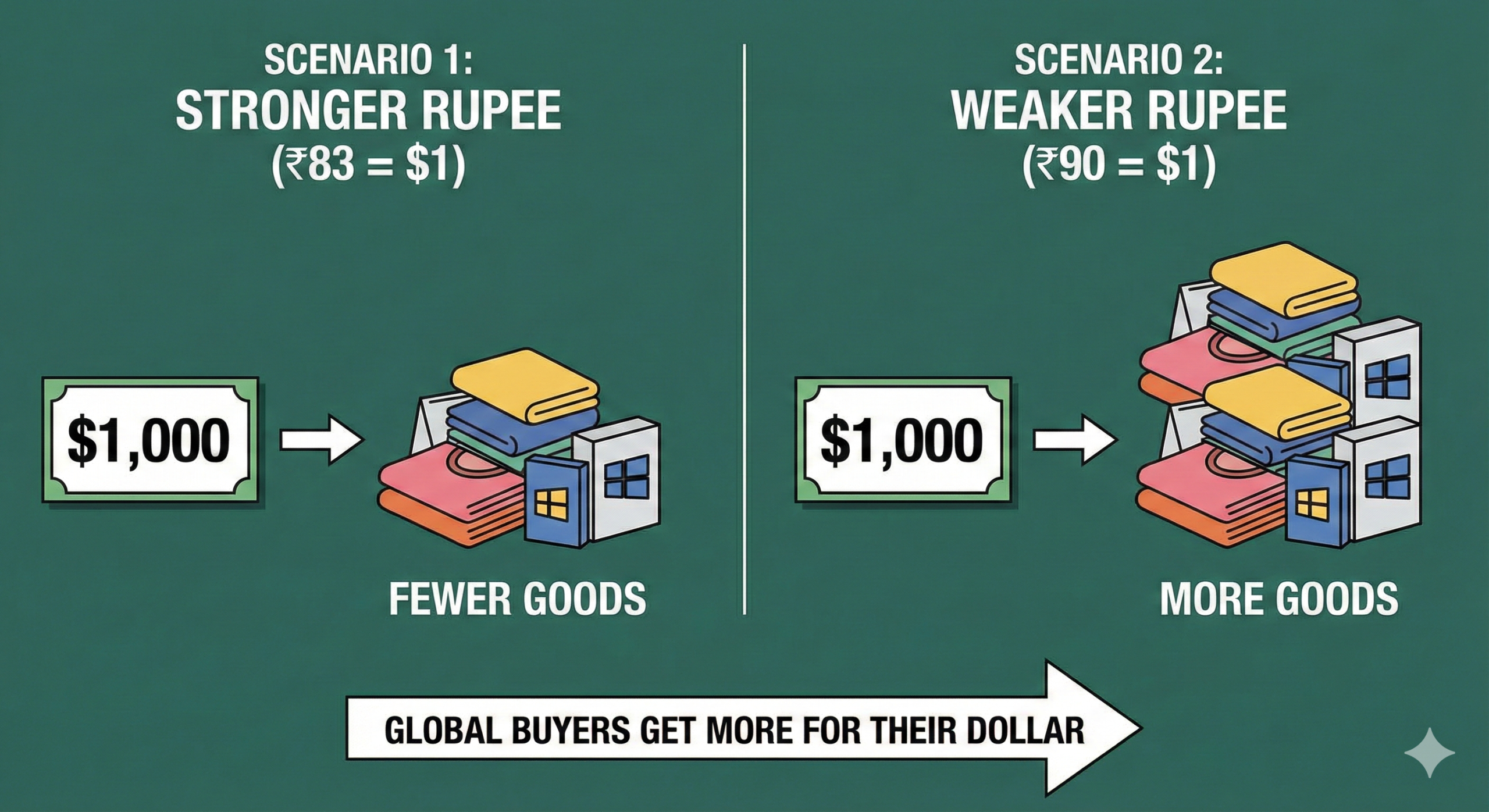
When the Rupee vs USD exchange rate trend slides from ₹83 to ₹90, Indian products essentially get a price cut for international buyers, without the Indian seller actually lowering their price.
Here is a simple example: Imagine an American buyer has a budget of $1,000 to buy cotton shirts.
At ₹83/$: That $1,000 buys them ₹83,000 worth of shirts.
At ₹90/$: That same $1,000 now buys them ₹90,000 worth of shirts.
Suddenly, buying from India offers more value for money than buying from a country whose currency is stable. This price competitiveness is the core engine of how weak rupee boosts Indian exports.
Who is popping the champagne? (The Winners)
The benefits of a weak rupee for exporters are not spread evenly. Some sectors win bigger than others.
1. The IT Sector: Earning in Dollars, Spending in Rupees
Indian IT giants (like TCS, Infosys, and Wipro) are the classic beneficiaries. Their business model is simple: they bill clients in Dollars but pay their armies of developers in Rupees.
The Gain: When the rupee falls, every dollar they earn converts to more rupees. This instantly pads their profit margins. It creates a cushion that allows them to be aggressive with pricing to win new contracts against global competitors.
2. Textiles and Handicrafts
This sector operates on razor-thin margins. A depreciation of 5-7% is a massive lifeline. It helps Indian exporters undercut competitors from Bangladesh or Vietnam. If you are selling t-shirts or carpets abroad, the Indian currency devaluation impact means you can keep your prices stable in dollars while taking home more rupees to cover your local costs.
Read Our Article on: Quick Commerce Profitability
It’s Not All Sunshine: The "Rough" Edges
Before we get too excited, we have to look at the negatives of falling rupee. Economics is rarely a one-sided coin. While the selling part gets easier, the making part can get harder.
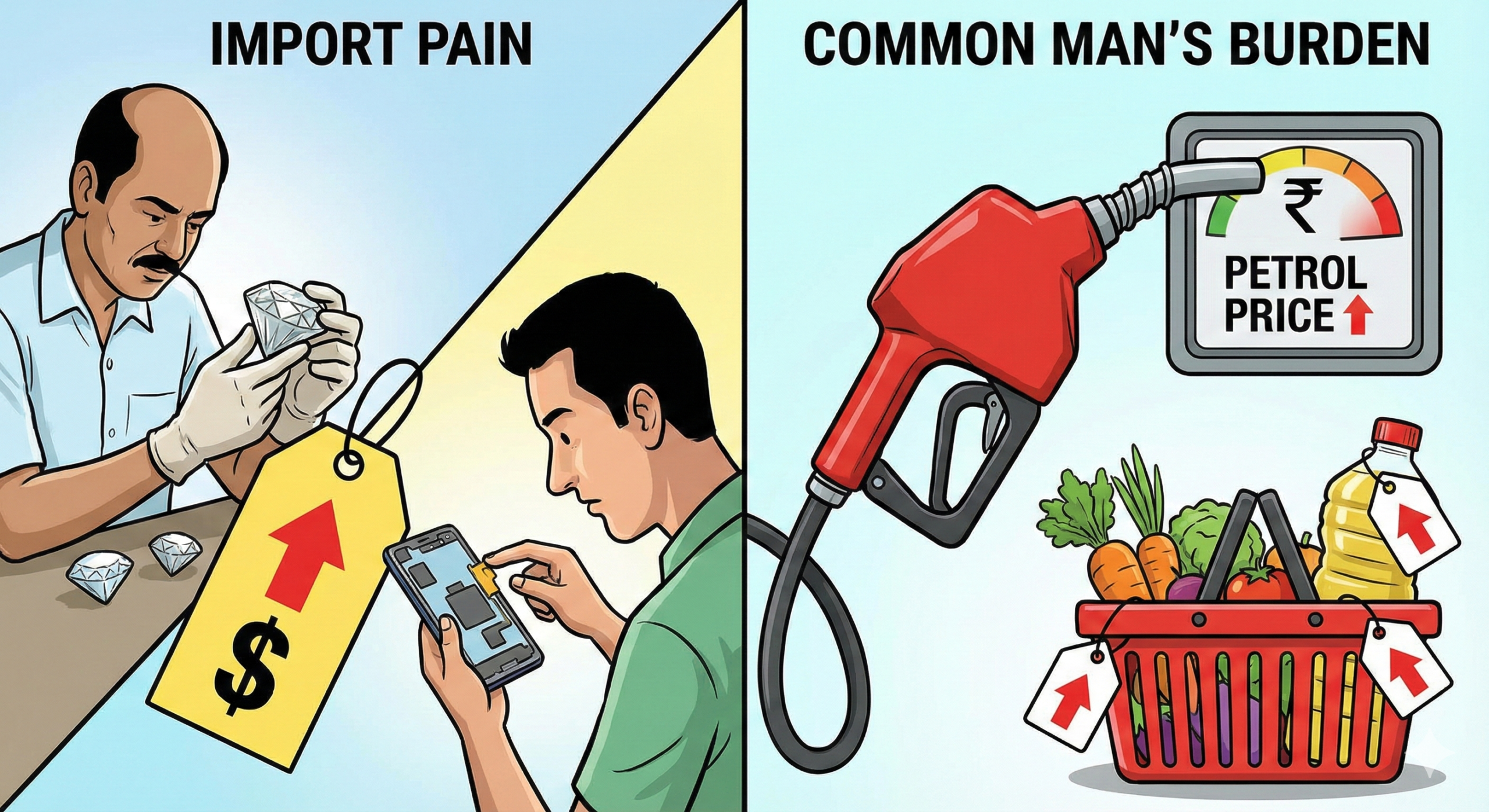
The Import Trap: Many “exporters” are also “importers.”
Diamond Industry: Surat polishes diamonds for the world, but they have to import the rough stones first. They pay for rough stones in dollars. So, while they earn more on exports, their input costs skyrocket.
Electronics: We export mobile phones, but we import the chips and screens. A weak rupee makes these components more expensive to buy, eating into the profits gained from exports.
Conclusion
So, is the Rupee at 90 good or bad?
It is a double-edged sword. For the export engine—specifically services and agriculture where import content is low—it is a powerful steroid shot. It helps how weak rupee boosts Indian exports by making India the most attractive option on the global shelf.
However, for the common man facing inflation and industries reliant on imported raw materials, it’s a challenge. The key for India lies in using this temporary “discount window” to capture long-term market share, rather than just enjoying the short-term currency gains.
How does the falling rupee affect your monthly budget or business? Let us know in the comments below!




MX58…Short and sweet! Might be a hidden gem. Gonna search and see if anyone has commented on it yet. Could be my next big win! mx58
Alright, folks! Gotta say, I’ve been digging around on onecasinoreview and it seems like a solid place to get the lowdown on different online casinos. Helpful stuff for us players, you know? Check it out: onecasinoreview
Hey! Just stumbled upon toma777casino. Looking promising so far. Seems like they’ve got a good selection of games. Gonna give it a whirl and see how my luck holds up! You can find them here: toma777casino
Hello everyone, found matejl. Has anyone given it a try? I like that its has an eye pleasing design. Have a look here at matejl
Okay, I gave bravobethistorico a shot and I gotta say, it’s pretty solid. The historical theme is a nice touch. Check it out! bravobethistorico
Loco777casino is kinda fun, if you’re into that crazy, high-energy vibe. Won a few bucks so far. Give it a whirl! loco777casino