

Table of Contents
ToggleIs Blockchain Just a Hype Train?
Let’s be honest—a few years ago, “blockchain” was a buzzword everyone threw around to sound smart. People bought digital pictures of monkeys for millions, and companies scrambled to launch “tokens” for no clear reason. Then, the hype cooled down.
But here is the interesting part: while the noise faded, the real work started.
You might be wondering, “Is this tech dead?” Far from it. In 2026, serious companies are doubling down on this technology, not for marketing clout, but for survival and profit. From tracking diamonds to ensuring your lettuce is safe to eat, the “boring” side of blockchain is quietly revolutionizing how the world works.
If you are a business leader or just curious about the future of tech, you need to know why businesses are betting on blockchain right now. Let’s dive in.
The 3 Real Reasons Businesses Love Blockchain
Forget about Bitcoin prices for a second. For a business, blockchain is simply a better digital ledger—a way to keep records that no one can cheat or delete.
1. Trust Without the Middleman
In traditional business, if Company A wants to pay Company B, they usually need a bank to verify it. If you want to buy a house, you need a notary. Blockchain removes these “trust agents.” The system is the trust. This saves massive amounts of time and fees.
2. Unbreakable Security
Hacking a centralized database (like a standard server) is hard, but possible. Hacking a blockchain? You’d have to hack thousands of computers across the world simultaneously. For industries like healthcare and finance, this level of security is priceless.
3. Radical Transparency
Imagine if you could see exactly where every part of your iPhone came from. Blockchain creates an “immutable” (unchangeable) history of a product. If a record says a diamond was mined in Canada, it stays that way forever.
Real-World Examples: Who is Winning?
You want proof? Let’s look at the giants who aren’t just testing the waters—they are swimming in them.
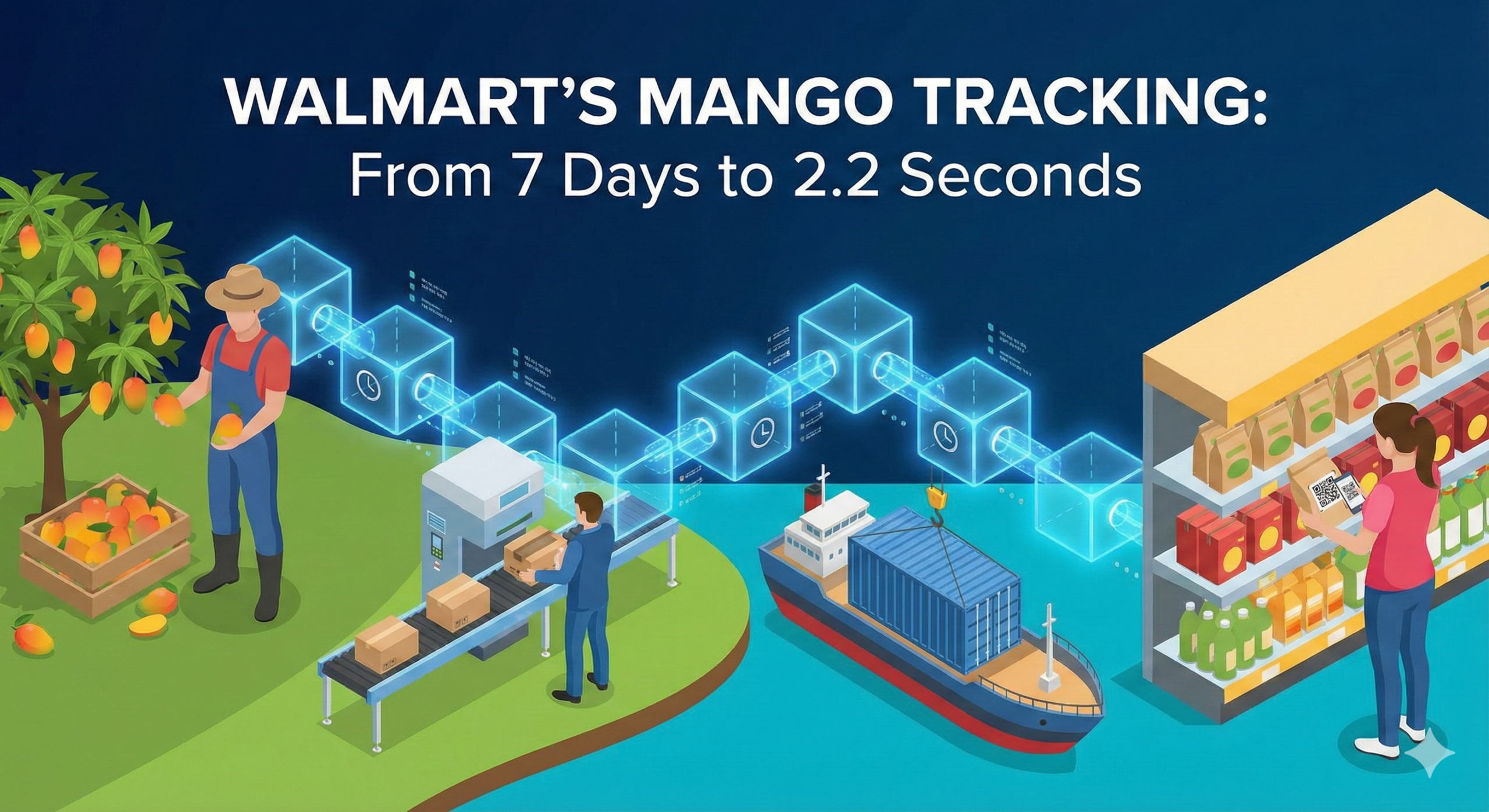
Walmart: Safer Food, Faster
Walmart used to take 7 days to trace the source of a package of sliced mangoes. If there was a salmonella outbreak, that delay could be dangerous.
The Fix: Using blockchain (Hyperledger Fabric), they reduced that tracking time to 2.2 seconds.
The Benefit: They can pinpoint exactly which farm a bad batch came from instantly, saving lives and reducing food waste.
Read our article on: Quick Commerce Profitability
De Beers: The Diamond Standard
The diamond industry has a history of “blood diamonds” (gems mined in war zones). De Beers uses its Tracr blockchain platform to register millions of diamonds.
The Benefit: When you buy a ring, you get a digital passport showing the gem’s journey from the mine to the store. It guarantees the stone is ethical and authentic.
LVMH: Luxury You Can Trust
Ever worried that expensive Louis Vuitton bag is a fake? The Aura Blockchain Consortium (founded by LVMH, Prada, and Cartier) gives luxury goods a unique digital ID.
The Benefit: Customers can scan a product to prove it’s real, increasing resale value and fighting the massive counterfeit market.
The "Flop" We Learned From
Not every bet pays off, and it’s important to talk about failures too.
Starbucks Odyssey was a loyalty program that let customers earn NFT stamps. While innovative, it was shut down in 2024.
The Lesson: People want utility, not complications. The program was a bit too complex for the average coffee drinker. In 2026, successful businesses are hiding the “tech” part—users shouldn’t even know they are using blockchain; they should just enjoy the benefits.
Read Our Article on: Edify Engine launches its AI-powered platform on Solana Blockhain
Traditional vs. Blockchain
Here is why businesses are betting on blockchain over old-school methods.
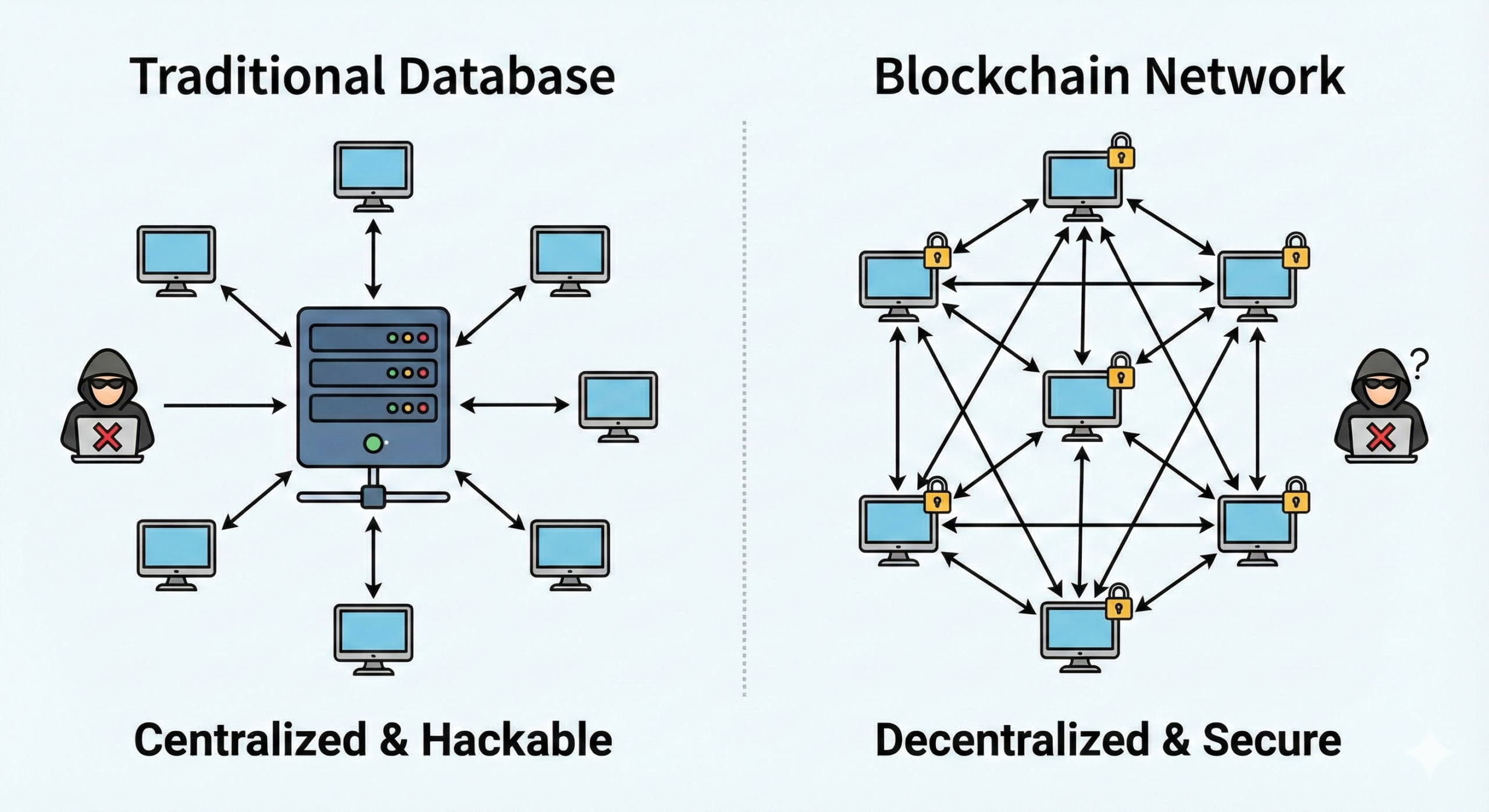
| Feature | Traditional Database | Blockchain Network |
| Control | Centralized (One boss) | Decentralized (Shared control) |
| Transparency | Private (Hidden silos) | Transparent (Permissioned view) |
| Security | Single point of failure | Hard to hack (Distributed) |
| Speed (Settlement) | Days (Banks/Paperwork) | Minutes or Seconds |
| Cost | High (Middleman fees) | Low (Direct Peer-to-Peer) |
Future Trends: What’s Next in 2026?
If you are looking ahead, keep an eye on these two massive shifts:
RWA (Real-World Assets): We aren’t just trading crypto coins anymore. Major banks are “tokenizing” real assets like real estate, gold, and government bonds. It makes buying a fraction of a skyscraper as easy as buying a stock.
AI + Blockchain: This is the power couple of the decade. AI creates content, and blockchain verifies who owns it. As “deepfakes” get better, blockchain will be the tool that proves a video or image is real.
Read Our Article on: Stablecoin Guide
Conclusion: Should You Bet on It?
The question isn’t “Will blockchain survive?” It’s “How will you use it?”
The companies winning today aren’t trying to build the next Bitcoin. They are using blockchain to solve boring, expensive problems like supply chain tracking and identity verification.
My advice? Don’t chase the hype. Look for the friction in your business—the slow paperwork, the trust issues, the security risks. That is exactly why businesses are betting on blockchain, and it might be the solution you need too.
FAQs
Why are businesses betting on blockchain in 2026?
Businesses are betting on blockchain because it offers unmatched security, reduces operational costs by removing middlemen, and provides real-time transparency for supply chains.
Is blockchain useful for small businesses?
Yes! Small businesses can use blockchain for secure smart contracts, accepting lower-fee payments, and proving the authenticity of their products to customers.
What industries use blockchain the most?
Currently, the Finance (DeFi), Supply Chain (Logistics), Healthcare (Patient Data), and Luxury Goods (Authentication) industries are the biggest adopters.
How to Start Integrating Blockchain into Your Business
- Identify a Problem: Look for areas in your business that are slow, expensive, or lack trust (like supply chain tracking).
- Choose a Platform: Decide if you need a public blockchain (like Ethereum) or a private one (like Hyperledger) for enterprise privacy.
- Run a Pilot Program: Don’t go all in. Start with a small project to test the technology’s ROI before scaling up.
Read More Articles on: Blockchain and Technology




Anyone got an OKBet redeem code they wanna share with a pal? Hook me up fam! I’ll owe ya one! Gimme that code: okbet redeem code
Okbetphp is where it’s at! The odds are decent, and the site is super user-friendly. If you’re into sports betting, give it a shot. You may be happy with okbetphp!
V9betxa is solid. Loads of sports betting options, live scores updating in real-time, what more could you want? Check it out if you’re serious about your bets. Find out at v9betxa!
Hey, checked out Bono Club recently! Pretty solid experience, buena onda. Definitely worth a look, especially if you’re looking for something new. You know, something fresh. Check it out bono club
Jil3, oh yeah! I’ve spent some time on that site. Decent selection, nothing groundbreaking, but reliable for a quick game. Worth a peek if you’re bored. Check it out: jil3
Phniceslot… hmm, haven’t tried them myself, but saw some streamers on it. Seems like they have a decent variety of slots. Might be worth a spin or two. Check it out phniceslot